
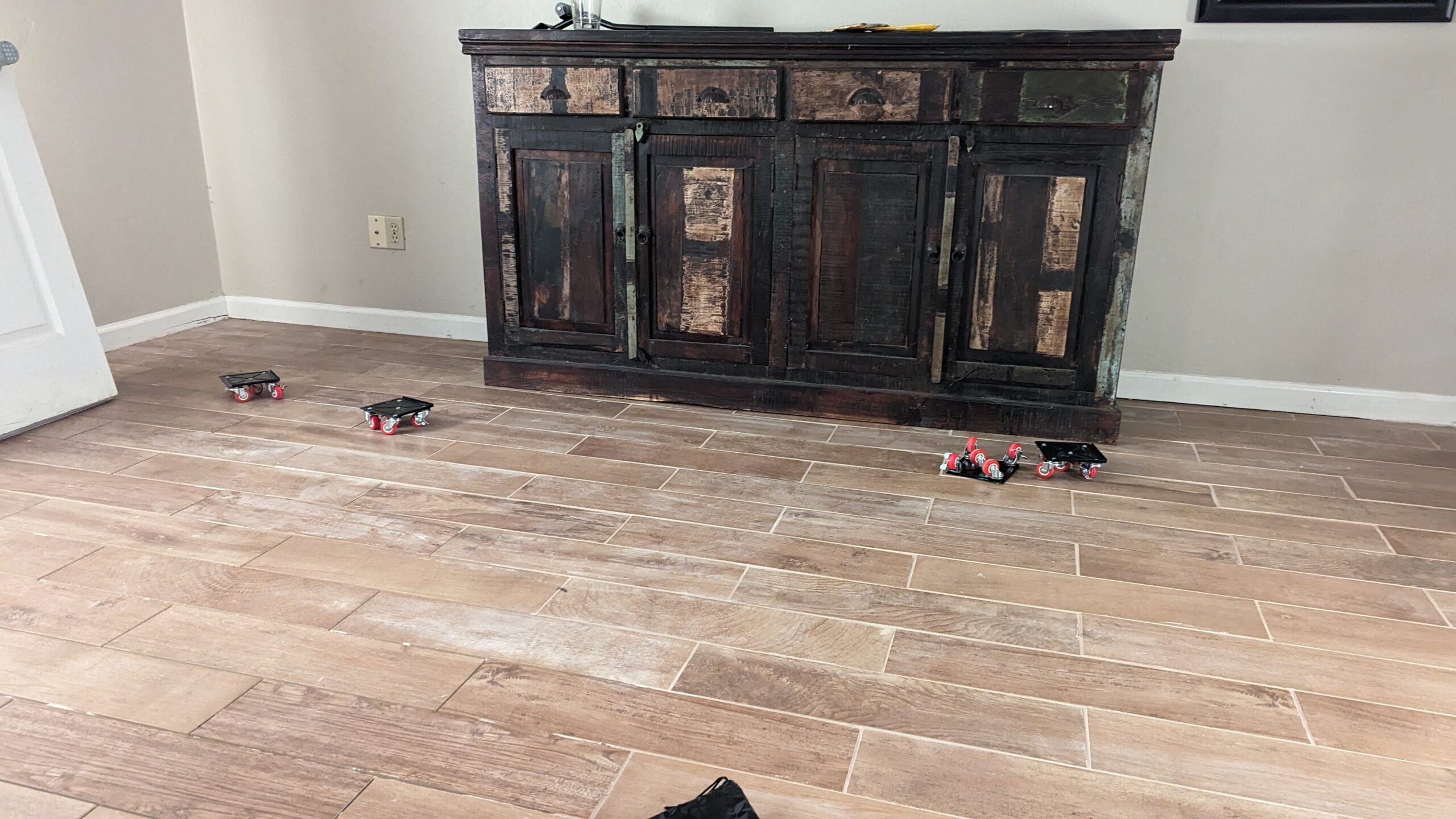
The above are my new floors and I LOVE THEM!!!
Let me start with a confession — I hate white tile. Every house we have ever owned has had white tile and I have spent the better part of my adult life plotting to get rid of it. This house was no different. It took me a solid ten years but I finally did it and I could not be happier.
Here’s how it happened and why it turned out to be one of the best decisions we’ve ever made for our home.
How It Started — The Water Heater That Changed Everything
We didn’t plan to retile the entire downstairs. The decision was made for us when our water heater decided to blow up and take out the wood floors in the process.
We live on a lake in Florida so wood floors were always a questionable choice anyway. Between the humidity, the occasional splash from coming in off the water, and now a full blown water heater disaster — it was time. We figured if we were already ripping everything up we might as well do it right.
Tile was the obvious answer.
Finding the Deal — 99 Cents Per Square Foot
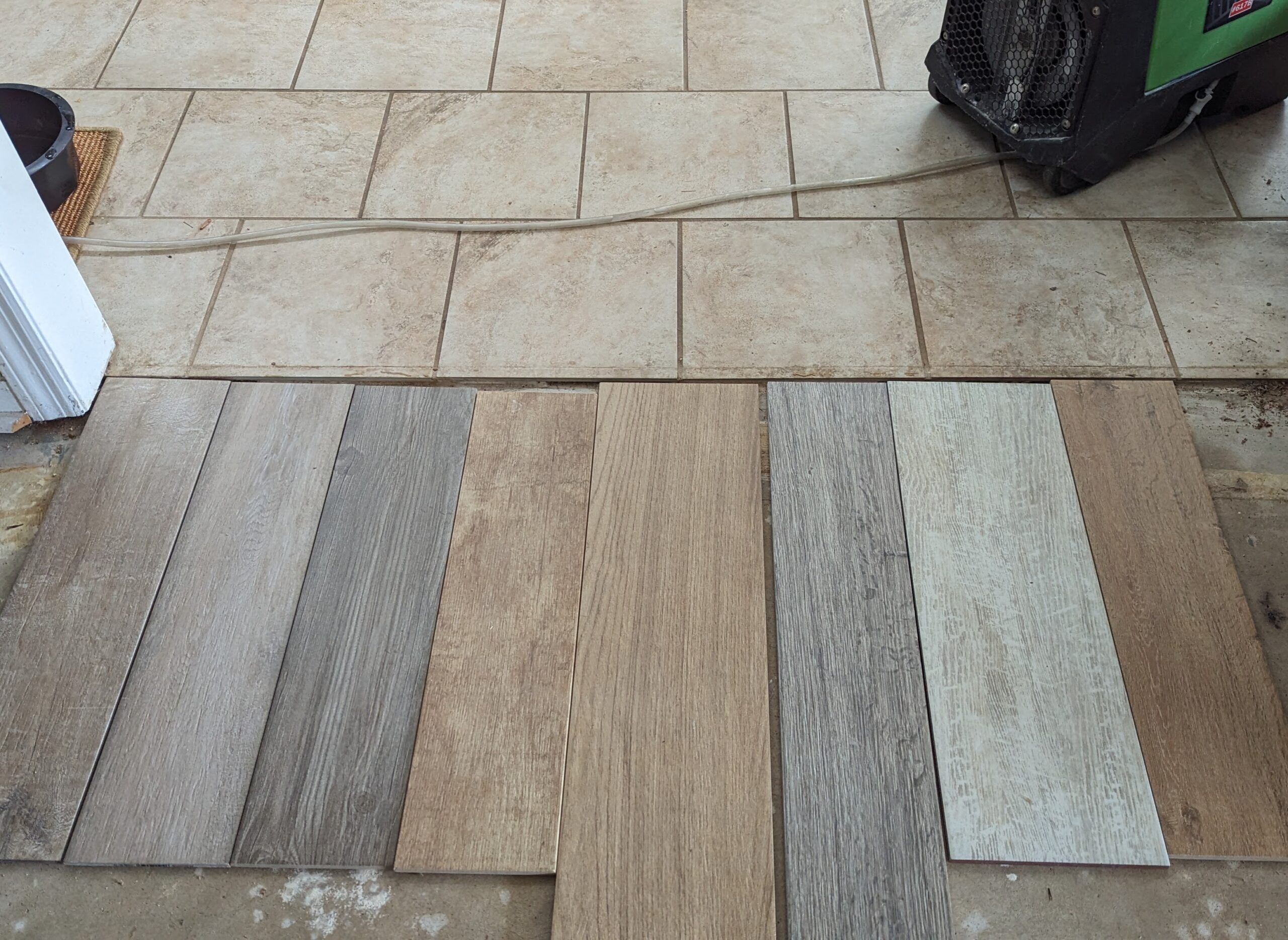
If you know me you know I wasn’t going to pay full price for anything. I found several options under $2 a foot. Of course I had to live with them for a few days to find one lol. It took a week to dry the floors out anyways so we had time!
We found gorgeous wood plank tile for 99 cents per square foot — which sounds impossible but it’s absolutely true if you shop around, watch for sales, and don’t fall in love with the first thing you see. I was amazed how much better they looked when they were laid out.
Seriously, if you are tiling ANYTHING, buy a box first and lay it out!
We had a friend help with the installation which saved us a fortune. The whole project came in dramatically under what we expected and the result looks like something out of a magazine.
What We Didn’t Expect — The Temperature Difference
Here’s the part that genuinely surprised us.
We knew tile would be easier to clean and better suited for lakefront living. What we didn’t know was how dramatically it would change the temperature of our home. I was honestly dumbfounded when I noticed it. It seriously reduced our monthly bill!
The downstairs is cooler in summer and warmer in winter — noticeably, meaningfully different. Not a little bit. A lot. We live in Florida where the AC runs from roughly May through October and our electric bill dropped after we made the switch. We hadn’t changed our thermostat settings, hadn’t upgraded our HVAC, hadn’t done anything different except put tile on the floor.
Tile naturally regulates temperature in a way carpet and wood simply can’t. It absorbs cool air and releases it slowly — keeping rooms cooler in summer without the AC working as hard. In winter the same principle works in reverse. It holds warmth longer than you’d expect.
We tell everyone who is even remotely considering new floors to go with tile. Not white tile — never again white tile — but the wood plank style that looks just like hardwood from five feet away and performs dramatically better in every way that actually matters.
Living on a Lake — Tile Makes Even More Sense
If you live near water of any kind tile is not a luxury — it’s a practical necessity. Between the humidity, the wet feet coming in from the dock, the occasional drip from swimsuits, and the general reality of lakefront life — wood floors are a constant source of anxiety. Every spill is a potential disaster. Not too mention showed every dog hair!
With tile? Nothing. Wipe it up and move on. We have never once worried about water damage since making the switch and that peace of mind alone is worth the price of the project.
The Wood Plank Tile Secret
The reason so many people still have outdated tile in their homes is they picture the white 12×12 squares of 1987. That’s not what tile looks like anymore.
Wood plank tile is long, narrow, and laid in a pattern that is genuinely indistinguishable from hardwood at a glance. We have had guests comment on our beautiful wood floors and had to tell them it’s tile. The look on their faces is priceless.
It’s warmer looking than traditional tile, easier to maintain than real wood, more durable than both, and performs better on your utility bill than either one.
Would We Do It Again?
Without hesitation. The only regret is that it took a water heater explosion to finally push us into it.
If you are on the fence about replacing your floors — especially if you live in Florida or anywhere with humidity and temperature swings — tile is the answer. Find it on sale, get a friend to help with installation, and prepare to be genuinely surprised by how much you love it.
And if you have white tile right now — I see you. I was you. There is hope.
Frequently Asked Questions
Does tile really help with energy efficiency? Yes — significantly. Tile naturally regulates temperature better than carpet or wood. It absorbs and releases heat slowly which keeps rooms cooler in summer and warmer in winter. We noticed a dramatic difference in our Florida home’s comfort level and electric bill after tiling our entire downstairs.
Is wood plank tile worth the cost? Absolutely — especially if you shop for deals. We found ours for 99 cents per square foot and had a friend help with installation. The total cost was a fraction of what hardwood would have run and the result looks just as good or better.
Is tile a good choice for lakefront homes? It’s the best choice. Humidity, wet feet, splashes, and general water exposure are no match for tile. We never worry about water damage anymore which was a constant anxiety with wood floors in a lakefront home.
How do you find cheap tile? Watch for sales at Home Depot, Lowe’s, and Floor & Decor. Overstock and clearance sections are goldmines. We found our wood plank tile for 99 cents per square foot by being patient and not falling in love with the first thing we saw.
Living on a lake in Florida and always finding ways to make our home work smarter. Check out more of our home tips and travel stories at OnMillerTime.