
Every year I end up with the same problem: more herbs than I know what to do with.
I grow herbs because I actually use them. Fresh rosemary gets tossed into roasted vegetables and sauces, basil goes into everything all summer, and mint seems determined to take over any piece of dirt it can find.
But eventually there are leftovers.
Maybe you trimmed your rosemary and have an entire pile of branches. Maybe the mint went crazy. Maybe you dried herbs for cooking and ended up with more than you’ll realistically use before next year’s garden starts producing.
I hate throwing perfectly good herbs away, especially when I grew them myself.
That’s how I ended up making these DIY dried herb sachets.
They’re ridiculously easy, cost almost nothing to make, and give those leftover herbs one more job before they finally make their way to the compost pile.
And unlike a lot of DIY projects, this one doesn’t require seventeen supplies, a Cricut machine, or an afternoon of questioning your life choices.
You basically need dried herbs and a little bag.
What Are Herb Sachets?
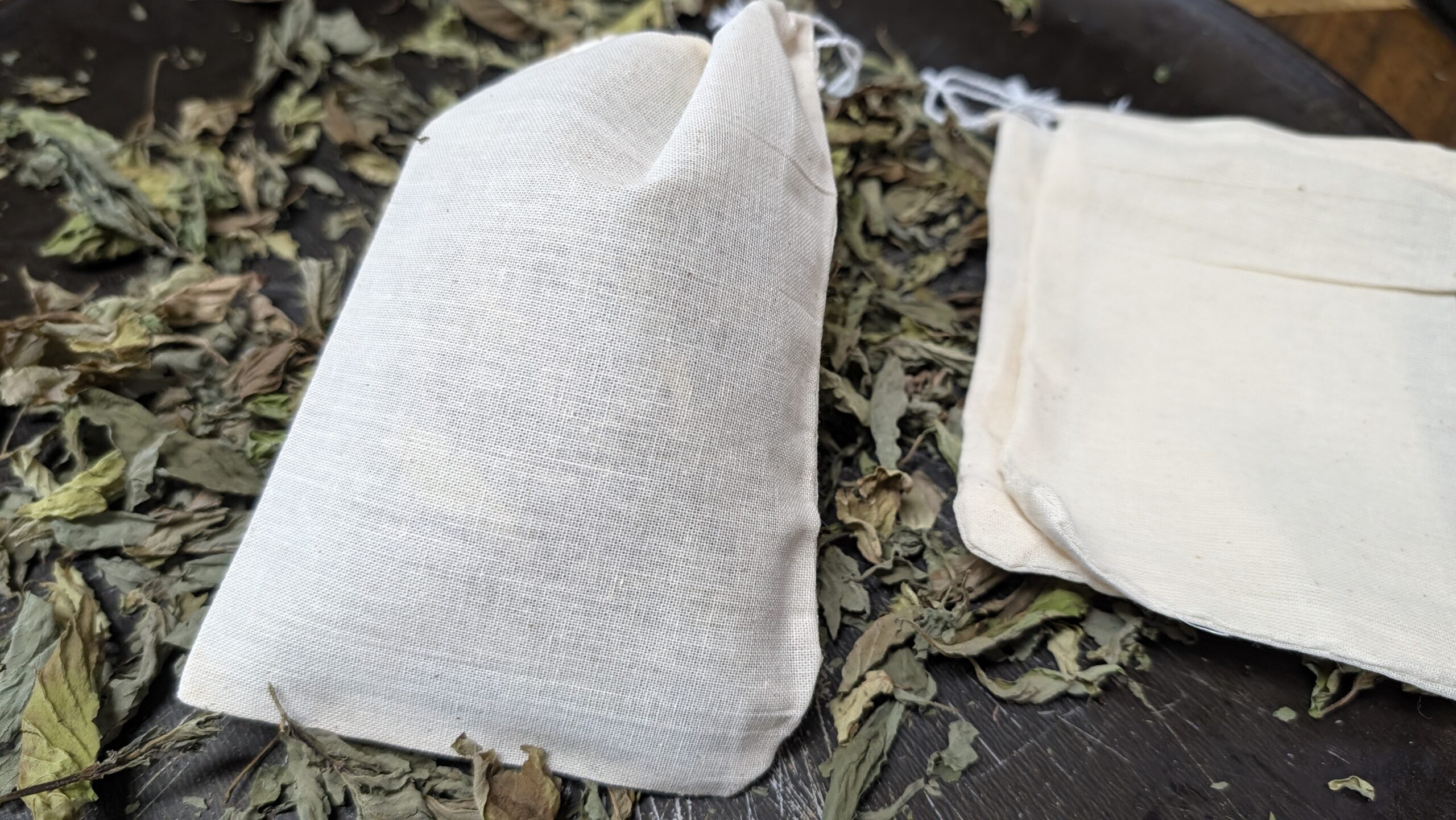
Herb sachets are simply small breathable bags filled with dried herbs, flowers, citrus peels, or spices.
You can tuck them into places around the house where you want a little natural fragrance.
- Dresser drawers
- Linen closets
- Towel cabinets
- Closets
- Storage bins
- Guest rooms
- Bathrooms
- Cars
- Gym bags
- Shoes
- Suitcases
I especially like them in drawers and closets because you get a little burst of fragrance when you open them without having an overpowering artificial scent hanging around all day.
When the scent starts getting weaker, just give the bag a squeeze. Crushing the dried herbs slightly releases more of their natural oils and perks the fragrance back up.
Why I Started Making Them
For me, this wasn’t really about finding another craft project.
It was about using what I already had.
After cooking, drying herbs for the pantry, and trimming plants, I still had leftover rosemary and other herbs. They weren’t bad. I just didn’t need another giant jar of dried rosemary.
Throwing them away seemed ridiculous.
I already compost kitchen scraps and garden waste, but I figured there had to be something useful I could do with the herbs first.
Turns out there is.
I dried them, stuffed them into inexpensive muslin bags, and suddenly my leftover garden herbs became little sachets for drawers and closets.
Once they stop smelling good, then they can go into the compost.
That’s my kind of DIY project: use it, reuse it, and eventually compost it.
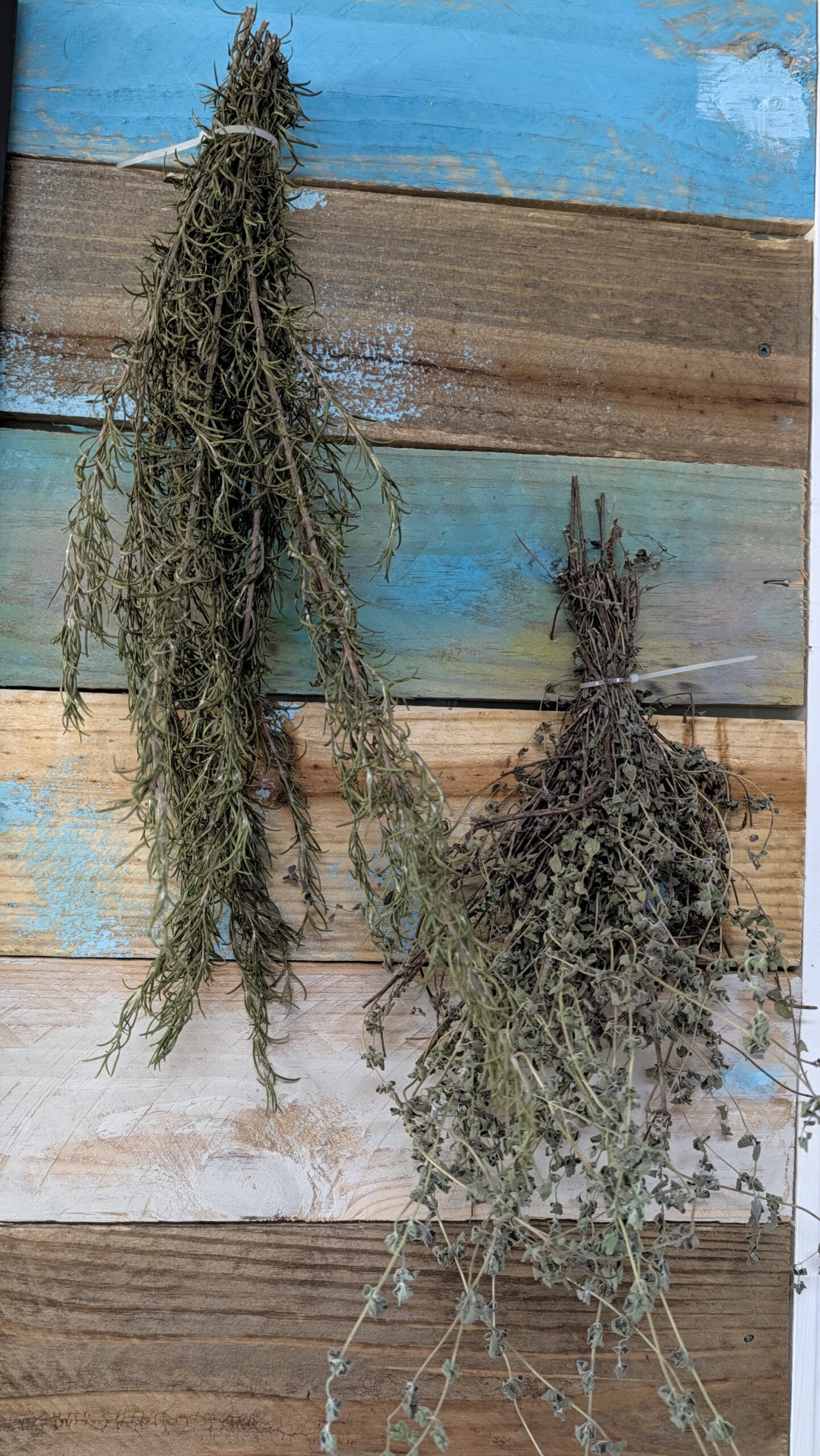
What You Need to Make Dried Herb Sachets
- Dried herbs
- Small muslin drawstring bags
- Scissors for trimming herbs
- A bowl for mixing
That’s it.
You can make them more elaborate if you want, but you absolutely don’t have to. The herbs are the star here.
Where to Get Muslin Sachet Bags
You can find small muslin drawstring bags pretty much anywhere craft and packaging supplies are sold.
- Amazon
- Walmart
- Michaels
- Hobby Lobby
- Dollar stores
- Craft stores
- Wedding favor suppliers
- Online packaging stores
Search for terms like muslin drawstring bags, cotton favor bags, herb sachet bags, or small cotton drawstring bags.
I like approximately 3 x 4-inch or 4 x 6-inch bags. They’re big enough to hold a decent amount of herbs without being bulky in a drawer.
You don’t need fancy bags. In fact, the cheap plain cotton ones are perfect because the fabric needs to be breathable. You actually want the scent from the herbs to be able to escape through the material.
You Don’t Have to Use Muslin Bags
This is also a good project for using scraps you already have around the house.
The container just needs to allow the fragrance through while keeping the dried plant pieces contained.
- Muslin drawstring bags
- Cotton drawstring bags
- Organza favor bags
- Small linen bags
- Cheesecloth
- Fabric scraps
- Old cotton pillowcases
- Old cotton shirts
- Clean cloth napkins
- Coffee filters
If you’re using scrap fabric, cut two small squares or rectangles and sew around three sides. Fill with herbs, then sew or tie the top.
Don’t sew?
Neither your rosemary nor your dresser cares.
Put the herbs in the center of a square of thin cotton fabric, gather the corners, and tie it closed with string or ribbon.
You can even put dried herbs into a coffee filter, gather the top, and tie it shut.
It isn’t going to win a crafting competition, but it’ll make your drawer smell good.
The Most Important Part: Completely Dry Your Herbs
Don’t put fresh herbs into your sachets.
They contain moisture, and sealing damp plant material inside a little cloth bag is a good way to grow something you definitely weren’t trying to grow.
Your herbs should be completely dry and crumbly before you make the sachets.
You can air-dry them by tying small bundles together and hanging them somewhere dry with good airflow.
You can also use a dehydrator or dry them slowly in the oven at a very low temperature.
Once they’re completely dry, remove thick woody stems and lightly break up the leaves.
Don’t grind them into powder.
You want pieces small enough to fit comfortably inside the bag but large enough that you’re not creating herb dust that works its way through the fabric.
Easy Herb Sachet Combinations
This is where you can use whatever you happen to have.
There isn’t one official recipe.
Rosemary Sachet
Sometimes simple is best.
Fill the bag with dried rosemary and you’re done.
Rosemary has a strong fragrance on its own, so you really don’t need to add anything else.
Rosemary + Lavender
- 2 parts dried lavender
- 1 part dried rosemary
This is one of my favorites for bedrooms, linen closets, and drawers.
Rosemary + Mint
Mix equal amounts of dried rosemary and mint.
This smells really fresh and works well in bathrooms, closets, and cars.
And if you’ve ever grown mint, you already know that finding enough mint for this project will not be a problem.
You probably have enough mint to make sachets for everyone you’ve ever met.
Citrus + Rosemary
- Dried rosemary
- Completely dried orange or lemon peel
You can dry thin strips of citrus peel and break them into small pieces once they’re crisp.
This combination smells fresh and clean without being overly sweet.
Lavender + Mint
Mix equal amounts of dried lavender and mint for a light, fresh scent.
This is another good one for linen closets and guest rooms.
Fall Spice Sachet
- Dried orange peel
- Cinnamon stick pieces
- Whole cloves
- A little dried rosemary
These are great during fall and the holidays.
Just remember that cinnamon and cloves are much stronger than most dried herbs. You don’t need much.
How to Make the Sachets
- Lightly crumble your dried herbs into a bowl.
- Mix together whatever combination you’re using.
- Open your muslin bag and fill it about half to two-thirds full.
- Don’t pack it tightly.
- Pull the drawstring closed.
Done.
Seriously.
That’s the entire project.
How to Make the Scent Stronger
Dried herbs aren’t going to smell like one of those plug-in air fresheners that punches you in the face when you walk into the room.
That’s not really the point.
These give off a lighter natural fragrance.
To make them smell stronger, lightly crush the herbs before filling the bag.
When the fragrance begins fading, squeeze and rub the sachet between your hands. This breaks the herbs a little more and releases additional scent.
You can also open the bag and add more freshly dried herbs.
If you’re making these mainly for fragrance rather than simply using garden leftovers, you can add a few drops of essential oil to the dried material. Add it to the herbs, mix well, and let it absorb before putting everything into the bag.
But honestly, I would try the herbs by themselves first.
The whole reason I started doing this was to use what I already had.
Make Sachets From Whatever You’re Growing
You don’t have to grow a traditional “sachet garden.”
Look around at what you already have.
- Rosemary
- Lavender
- Mint
- Lemon balm
- Sage
- Thyme
- Oregano
- Basil
Some retain their fragrance better after drying than others, so experiment.
Rosemary, lavender, and mint are especially easy places to start.
And don’t overlook citrus if you have lemon, lime, or orange trees. The peels can be dried and mixed with herbs instead of going straight into the trash or compost.
Use Them Before You Compost Them
This is probably my favorite part.
I’m not buying dried herbs to make sachets.
I’m taking something I would have eventually thrown into the compost pile and getting another use out of it first.
Garden → Kitchen → Sachet → Compost
That’s a pretty good run for a handful of rosemary.
Once your sachet has completely lost its scent, open it up and dump the herbs into your compost.
Then refill the same bag with the next batch of dried herbs.
You can keep reusing the muslin bags over and over.
They Make Easy Homemade Gifts Too
If your garden really goes crazy, these also make inexpensive little gifts.
Fill several bags with dried lavender, rosemary, or mint and tie them together with ribbon.
You could even write what’s inside on a little kraft-paper tag.
- Housewarming gifts
- Gift baskets
- Teacher gifts
- Hostess gifts
- Mother’s Day gifts
- Christmas gifts
And unlike another random decorative thing, the recipient can actually use them.
Don’t Buy It If You Can Make It
I’ve gotten much more interested in finding ways to use what we already have instead of automatically buying another product.
This is a perfect example.
You can absolutely buy scented drawer sachets.
But if you’ve already got herbs growing outside, why?
Dry the leftovers. Grab a handful of inexpensive reusable muslin bags. Fill them up and put them to work.
They make the house smell good, keep perfectly usable herbs out of the trash, and eventually the filling can still end up in the compost where it would have gone in the first place.
Only now you got one more use out of it.
And that’s a DIY project worth the two minutes it takes to make.